
Why Resilience Must be Designed, Not Encouraged
Every business right now is talking about resilience. In Australia, it has become one of the most over-used words in the leadership vocabulary, right next to culture, capability and transformation. The intention is good. Leaders know the environment they’re operating in is getting harder, not easier. Productivity is stagnant. Attrition is climbing. Burnout is rising faster than new talent can be developed. Something has to shift.
The problem is the default approach has been to try and “encourage” resilience at the individual level. Organisations are asking people to be resilient, without changing anything in the system that is depleting those same people. This is why resilience efforts are failing. Resilience cannot be encouraged into existence. It has to be designed into how work happens.
Resilience is not a personality trait, it’s a system effect
Resilience is still misunderstood inside most organisations. Leaders often talk about resilience as if it is a personal characteristic that certain individuals possess. Some people are “naturally resilient”. Others need to “be more resilient”. This framing is outdated and deeply unhelpful.
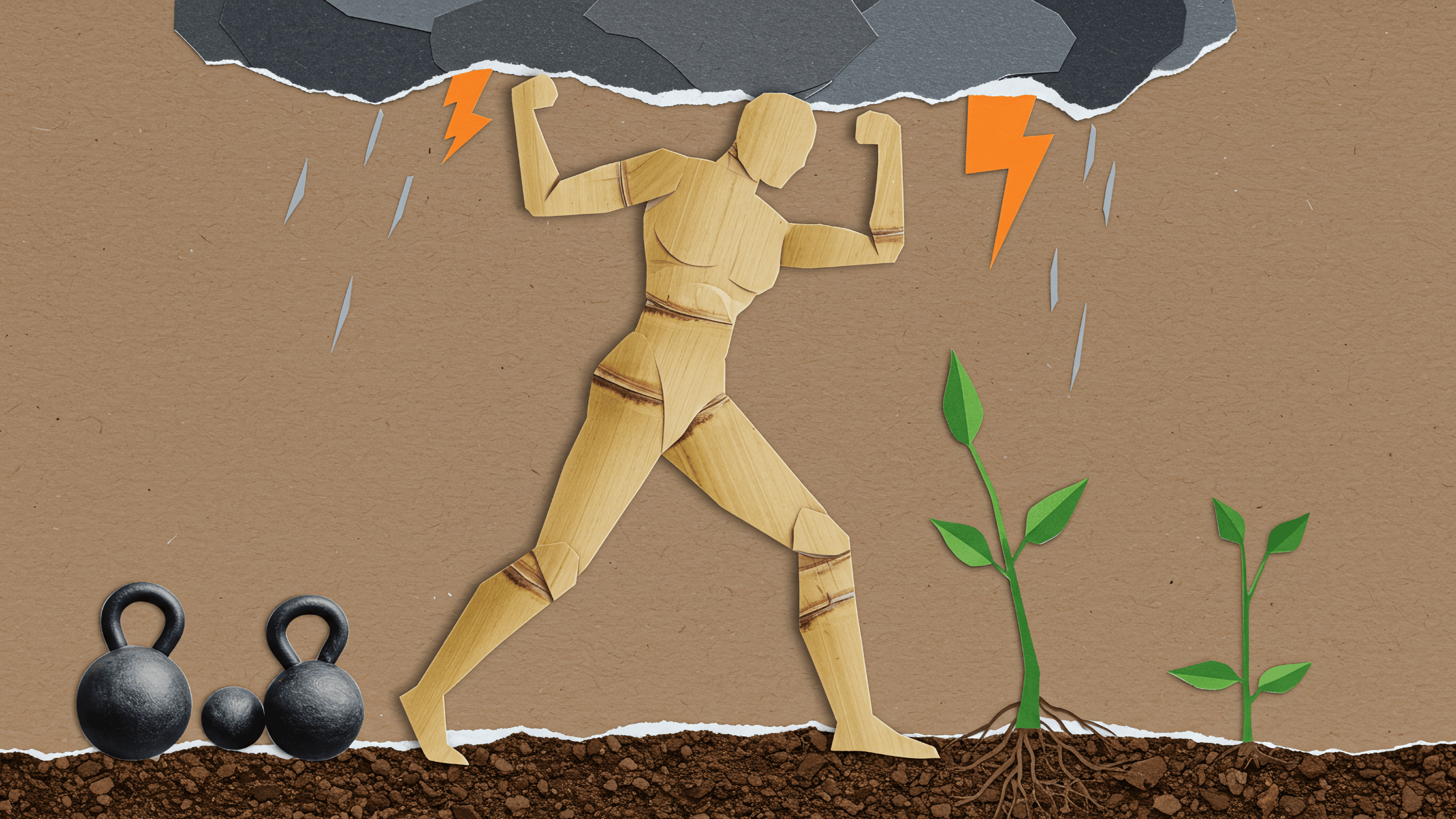
Resilience is not a personality trait. Resilience is a system output. It is the outcome of how an organisation designs work, makes decisions, manages load, responds to pressure and distributes accountability. You can put the most psychologically healthy, high performing person into a poorly designed operating system and they will eventually fatigue, disengage, or burn out. You can take an average performer and place them into a well-designed, predictable, rhythm-based operating environment and they will perform above their level.
This is the hard truth most leaders don’t want to confront: resilience is not located inside the individual. Resilience sits inside how the organisation is architected. It is the collective capacity for a system to absorb stress, without eroding capability, clarity or energy. When resilience is designed, performance becomes more stable, recovery becomes normalised, and transformation becomes sustainable.
Why “resilience training” doesn’t move the dial (200 words)
There is a reason resilience training has become a multimillion-dollar industry in Australia. Leaders are desperate for a lever that doesn’t require them to restructure operating models, re-align priorities, or redesign how work flows. So organisations keep investing in coaching, masterclasses, mindset tools, meditation apps, and skill-building programs designed to make individuals cope better with the load. The problem isn’t that these programs are poorly designed or lack value. The issue is that they are pointed at the wrong layer of the system.
Most resilience training exists at the level of psychological capability, not organisational architecture. It teaches people how to pause, breathe, reframe, regulate and reset. Those are useful human skills, but while organisations elevate those practices, they are simultaneously generating the very conditions that create depletion in the first place. Teams are still dealing with too many priorities, unclear decision ownership, context switching, fragmented collaboration and a constant urgency cycle. Fatigue is not coming from a lack of coping skills. It is coming from the shape of the work system itself.
This is why resilience programs often feel like a Band-Aid. They help individuals manage symptoms but do not remove the underlying drivers of those symptoms. Real resilience is not created by teaching people how to survive the load. It is created by redesigning the system so the load is genuinely sustainable.
The mechanics of designed resilience
When resilience is treated as an architectural feature of an organisation, not a personal trait, new levers emerge. These levers are structural and they shape how much energy people have available to perform. The first is rhythm. High-performing organisations don’t run continuous sprinting. They build operating cycles. There are push periods, stabilisation periods, and recovery periods built into the workflow. Humans were never designed to be in perpetual performance mode.
The second lever is cognitive load design. This is not about reducing workload, but about reducing unnecessary “mental tax”. It includes removing duplicate meetings, simplifying decision pathways, and reducing context switching so people spend more time in actual execution, not navigation.
The third lever is decision-rights clarity. Too much work fatigue is caused by ambiguity. When it is unclear who decides, work stays open, rework increases, and emotional labour spikes. Organisations with designed resilience are ruthless about clarity, who decides what, at what altitude, and under which conditions.
Manager behaviour is also a core lever. When managers protect time, run clean priorities, and shorten execution loops, energy increases even without changing total workload. Conversely, unclear direction, shifting priorities, and performative urgency create systemic depletion.
Finally, resilience by design normalises recovery windows. Not just annual leave. Not just wellness days. Small, rhythm-based pauses built into the way work moves. This is resilience designed as an operating system, not as an expectation that people will self-manage and self-regulate in a system that is structurally working against them.
The organisations who get this right (and what they do differently) (200 words)
The organisations with high performance and low burnout don’t look “nicer”, softer, or more employee-pleasing. They look cleaner. They have fewer priorities, fewer decision bottlenecks, fewer meetings, and less noise. It is not about offering unlimited wellbeing benefits. It is about designing the environment so people do not need to constantly self-defend their time, energy, and attention.
These workplaces don’t assume resilience. They manufacture it. They shorten planning horizons. They deliberately reduce work-in-progress. They run tighter rhythms between feedback and action. Their leaders talk about energy management as a business discipline, not a personal responsibility of employees. They have mechanisms (not motivational campaigns) for preventing fatigue in the first place.
Compare that to organisations who treat resilience as a personality dimension: they push velocity, chase outputs, and then attempt to patch over the depletion with wellness initiatives. It is the reactive model and it predictably fails because it treats stress as an emotional state instead of a design outcome.
The highest performing workplaces today are not “stress free”. They are high clarity, high alignment, high recovery systems. Resilience shows up not because individuals are unusually strong but because the organisation is engineered to make sustained performance possible.
—-
If leaders want sustained performance, the solution is not asking people to cope harder. It is redesigning the system so performance is sustainable by design. Resilience is not a poster. It is not a mindset. It is an architecture. And when you build it into the operating model, productivity follows, without burnout as the by-product.
If you’re ready to measure and design resilience in your organisation, book a GRACEX demo.





.png)






.png)
.png)
.png)
.png)

.png)
.png)
.png)
.png)
.png)